Creative Block? Try Making Art with Your Hands
I've been very fortunate in my 50+ years as a professional photographer. When I graduated college with a degree in photography in 1976, I went directly into the advertising world. I worked every day making images for clients under the direction of creative directors. Over the decades, I produced thousands of images. On weekends, I stole time away from my family by waking up very early and taking pictures from the deck of the plants and flowers that grew in the garden while the family slept. The idea of a creative block had no time in my schedule. Originally my work was made on film — lots of 8x10 film. Later, we transitioned to high-end digital capture as the industry demanded the new workflow.
When I 'retired' from advertising work, I fell in love with what is called 'alternative process photography.' The aesthetic of tintypes hooked me. I learned how to make these images on glass and metal plates using the historic process from the 1850s. I've made hundreds of images using the tintype process. The combination of making photographs by hand, without digital methods, took me back to my roots of shooting film, before we added digital capture to the studio advertising work.
Making pictures by hand has drawn me further and further into that world of alternative process photography. I can count processes such as platinum and palladium printing, cyanotypes, kallitypes, photogravure, and several others as part of my creative toolbox. As I grow as a creative image maker, my work is influenced by these years of working with my hands, heart, and mind together. It is not perfect, but it keeps me interested even while I sometimes struggle to find that image in my mind's eye and translate it to the physical world. You see, for me, an image is not complete until I can hold it in my hands and look at the subtle nuances of light and texture in the picture.
I look at art all the time. Whether online, in galleries, in museums, or at my artist friends' studios, I'm always seeing inspirational art. A few years ago, I saw some gold gilded images in a gallery in Santa Fe. The curator was kind enough to pull work by various artists from the flat files, and we discussed just how beautiful they were. Here were works by masters that simply could not be shown in their real beauty by an image at 72 DPI online. They needed to be experienced in person, with good light.
One of the artists had these gold gilded pieces on glass that were really wonderful. However, the surprise came when the curator turned out the lights and just allowed these pieces to radiate from across the room without direct light. I was hooked — once again, with another artistic process to explore. Since then, I have learned how to gild photographic images made on vellum, Japanese papers, teabag paper, and glass. These images are radiant and must be witnessed in person. Gilding brings a depth and glow no screen can capture. They can really reflect light back to the viewer. The art can be gilded with gold, silver, platinum, and other precious metals. I have spent several years refining the process to make it easy, safe, and scalable from small to very large.
I have run workshops to teach my gilding methods. Recently, I brought that knowledge online so that artists across the nation and the world can learn. To make sure the online workshop was good, I asked several friends around the world to beta test the course. The results are really incredible. I take great joy when the beta testers are not only producing amazing new work, but are so enthusiastic about creating work with new skills. I think a solution to creative block lies not only in learning a new way of seeing and doing, but in the satisfaction of using your hands to make art. Bring your visions to life in the physical world, not just in cyberspace.
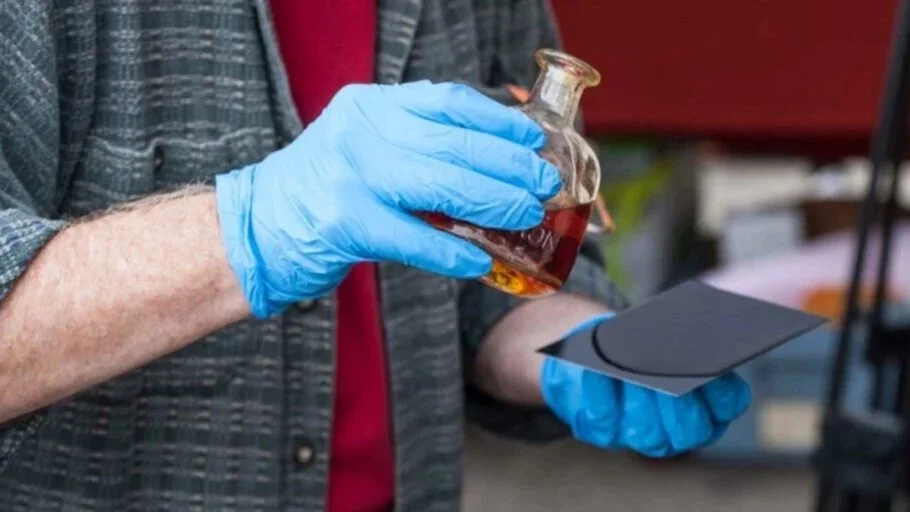
My alternative process journey began years ago when I learned the tintype process from the 1850s. I continue to learn this and other artistic processes.