What Is a Tintype?
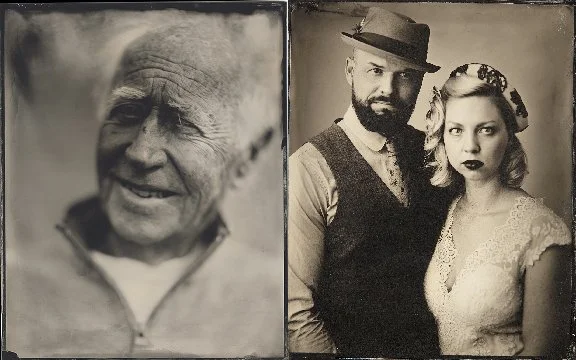
A tintype is a photograph made on a plate of metal — chemistry, light, and about 170 years of history. There's no negative and no reprint: the plate in your hands is the only one that exists. It's the oldest portrait process still in use, made the same way it was in the 1850s — re-invented here with modern materials and a modern eye.
We fuse color, code, and curiosity to redraw what art can be.
Your sitting, minute by minute
You book an hour. Here's roughly how it goes:
Minutes 0–15. We talk. How you want to look, what to wear — solid colors work best, avoid logos and busy patterns — and pick a backdrop. The plate is four inches by five (or eight by ten), so this is a head-and-shoulders portrait, not a lifestyle spread.
The plate gets made. I flow collodion — think liquid glass — across a black metal plate, and while it's still wet, dip it in silver. Wet plate photography is literal: the plate must be sensitized, exposed, and developed while wet, all in a matter of minutes. There is no "later."
The exposure. You sit. I slide the plate into the camera and remove the cap — the dark cap, like in the movies, because that part is real. You hold still for a few seconds. Longer than your phone asks of you, short enough that nobody's ever complained.
Development. The plate goes into the developer and the image appears in about fifteen seconds — upside down and backwards. You're welcome to watch. Most people can't look away.
Fixing and washing. The milky silver haze clears and the image goes from ghost to permanent. What's there is there.
The last stretch. Your plate dries while we finish up. Before you go, we'll settle how your plate reaches you — varnished and mailed, with an optional high-resolution digital scan. You'll know exactly what's happening with it before you leave.
Why it looks like that
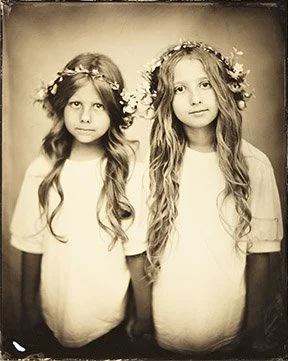
The swirls, the specks, the soft edges, the sometimes-imperfect corners — that's not damage and it's not a filter. It's the process showing. Every plate carries the marks of the day it was made: the chemistry, the light, the hand that poured it. Two sittings on the same afternoon will not produce two identical plates. That's the point.
What you take home
The plate itself — the only one. It's a 4×5 or an 8×10 piece of metal that will outlast every phone in your house.
An optional high-resolution digital scan is available at booking.
Book a sitting
Up now: the Belen Pop-Up at RoadRunner Arts Hub — December 5 & 6 → Book Belen Here
Pre-book your hour either a 4×5 tintype or an 8×10 tintype, or take your chances as a walk-in.
Prefer the studio in Rio Rancho? Rio Rancho booking